The Crowd Is the Commercial: How Halftime Became Prime Ad Real Estate
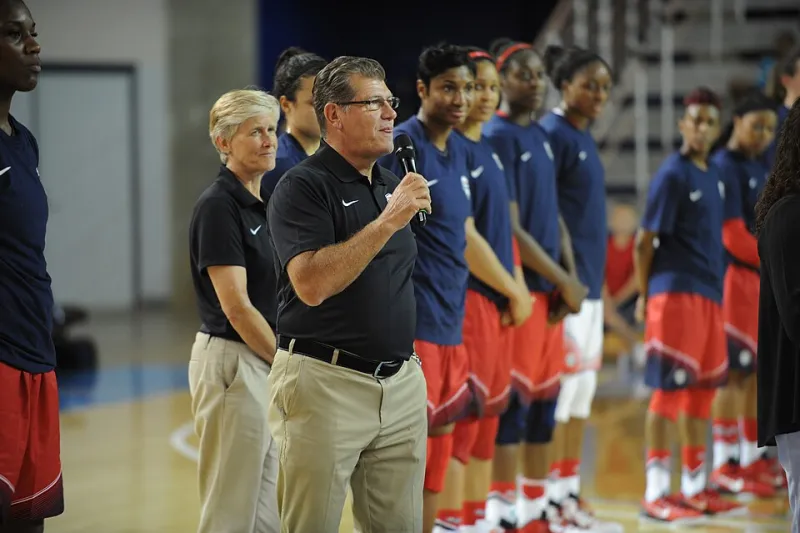
Photo: Master Sgt. Terrence Hayes, Public domain, via Wikimedia Commons
Let's be honest with ourselves for a second. When was the last time you remembered a courtside LED ad? You can't. But you probably can remember the guy who sank a half-court shot for a free truck, or that viral video of an entire stadium section doing a choreographed dance for a fast-food giveaway.
That's not an accident. That's strategy.
Across American professional sports, the most valuable sponsorship inventory isn't hanging on a wall or stitched into a jersey. It's happening live — in the timeouts, at the half, in the seventy minutes of real human attention that no DVR can skip and no second screen can fully steal.
The Signage Problem Nobody Wants to Admit
Traditional in-venue advertising was built on a simple promise: fans will look at your logo because it's there. And for decades, that was good enough. The problem? We now live in a country where the average NFL broadcast cuts to a commercial break roughly every five minutes of game action, and fans have trained themselves to treat static branding as wallpaper.
Research on in-venue marketing keeps landing on the same uncomfortable truth: passive signage generates awareness at best, and awareness is the cheapest, most forgettable rung on the marketing ladder. Engagement — actual participation, actual emotion, actual memory — lives somewhere else entirely.
Somewhere like midfield, at the ten-minute mark.
What the Pros Are Actually Doing
Look around the leagues and you'll see the shift in real time.
The NBA has turned timeouts and halftime into a laboratory. Brands aren't just sponsoring the kiss cam anymore — they're producing mini-competitions, fan-vs-fan challenges with sponsored prize packages, and crowd-wide interactive moments engineered specifically for the jumbotron and the phone in every fan's hand. The smart activations are designed to be filmed by the people experiencing them. The in-arena moment is the product; social media is the distribution.
The NFL, ever the marketing machine, has leaned into high-stakes spectacle. Sponsored kicking challenges, halftime skill contests with life-changing prizes, and branded fan zones that turn a four-hour stadium day into a full brand immersion. When a national broadcast cuts to a halftime stunt with a sponsor's name stamped across it, that brand just bought something a 30-second spot can't touch: an organic moment people talk about on Monday morning.
MLS might be the most interesting case of all. With a younger, hungrier fan base and rising stars drawing new eyes to American soccer, clubs have been remarkably creative with matchday activations — supporter-culture tie-ins, halftime challenges rooted in soccer skills rather than generic carnival games, and community-driven giveaways that feel authentic to the sport instead of pasted on. It's a reminder that the best activations respect the game they're embedded in.
The Engagement Math
Here's the pitch we make to every brand that walks through our door: signage buys impressions. Activations buy interactions. And interactions convert.
A fan who participates in a sponsored contest — who laughs, competes, wins, or even just watches their section go nuts — forms a memory tied to your logo that no static ad can replicate. Add a social amplification layer, where thousands of attendees capture and share the moment, and a single in-game activation can generate earned media worth multiples of the original spend.
The brands paying for LED boards alone? They're leaving that multiplier on the table. Every game day is packed with dead air — media timeouts, halftime, weather delays, injury stops. That's inventory sitting there, waiting for a brand bold enough to fill it with something worth watching.
How to Build an Activation That Doesn't Flop
Not every halftime stunt lands. The difference between a viral moment and an awkward silence usually comes down to a few fundamentals:
- Design for the fan, not the brand. If the activity isn't genuinely fun, nobody participates and nobody films it. Entertainment first, branding second.
- Build the share trigger in. Plan the camera angles, the hashtag, the moment of spectacle. Assume the whole thing will live on social media — because it will.
- Respect the sport's culture. A branded free-throw contest works in an NBA arena. The same stunt at a soccer match falls flat. Know your audience's rituals.
- Measure engagement, not just reach. Participation counts, app scans, social mentions, earned media value — track what actually happened, not just how many eyeballs were theoretically present.
Stop Renting Space. Start Owning Moments.
The sponsorship landscape in American sports has fundamentally shifted. Fans — especially younger ones — don't remember logos. They remember experiences. And the brands that understand this are turning game days into their most productive marketing asset of the entire year.
The next great sponsorship pitch isn't about where your logo sits in the arena. It's about what your brand does when the clock stops.
The teams have figured it out. The smart brands have figured it out. The only question left is whether you're going to keep paying for wallpaper — or start producing the show.