Forget the 30-Second Spot: Why the Highlight Clip Is Sports Marketing's New Gold Standard
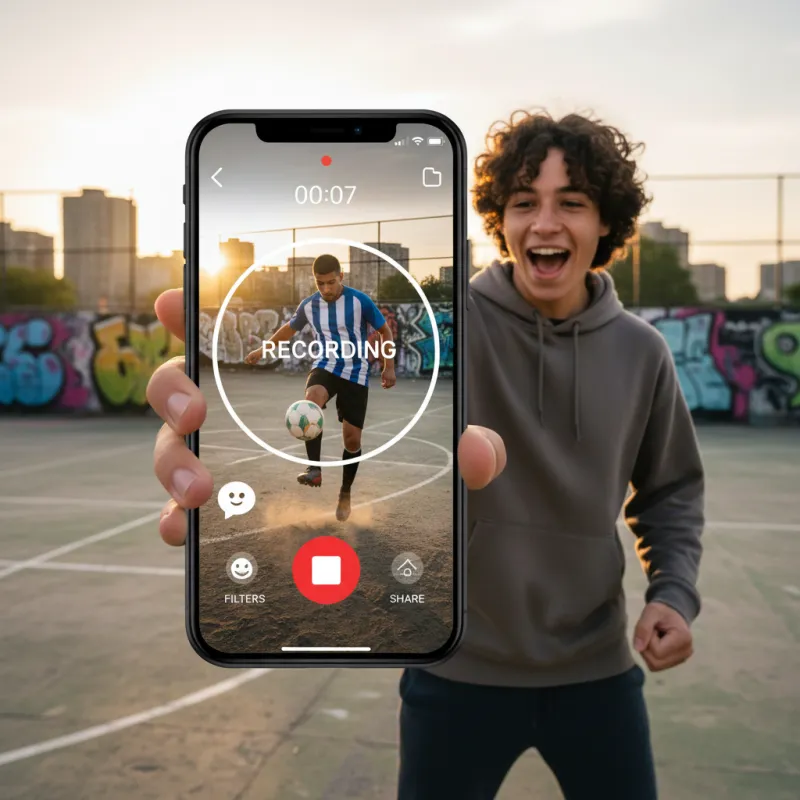
Photo: athlete filming smartphone vertical video sports highlight, via fd26cb97-690c-4bae-b1d4-98a94c047ad5.selstorage.ru
Let's be honest about what's happening: the 30-second commercial is on life support, and the highlight clip pulled the plug.
For decades, the sports sponsorship deal followed a rigid formula. Brand pays athlete. Athlete appears in polished commercial. Commercial airs during the game. Everyone pretends the audience didn't fast-forward through it on their DVR, and now, scroll past it on their phones.
That formula is broken. What replaced it is faster, messier, and infinitely more valuable: the highlight-reel sponsorship, built around moments rather than campaigns.
Seven Seconds of Undivided Attention
Here's the reality of the modern American sports fan: they're not watching your commercial. They're watching the dunk, the walk-off homer, the Hail Mary — usually within minutes of it happening, usually on a phone, usually with the sound off at first.
Short-form video platforms have trained an entire generation to process sports in bite-sized bursts. A highlight clip that hits 100,000 views in an hour has done something a Super Bowl ad dreams about: it earned attention voluntarily, and it spread because people wanted to share it.
Now layer in the athlete's own channels. When a player posts a viral moment to their own account — often with better reach than the brand's official page — the sponsorship opportunity isn't a commercial break. It's the caption, the watermark, the subtle brand cue baked into the moment itself.
The Deal Structure Hasn't Caught Up — And That's the Problem
Here's my frustration with a lot of sponsorship contracts still being written today: they're built around impressions and airtime, not moments.
The old model says: athlete does X appearances, wears the logo, appears in Y ads. Fine. But the modern fan doesn't remember logo placement. They remember moments — and moments can't be scheduled into a media buy.
The deals that win right now are structured around virality triggers:
- Moment clauses: Contracts that guarantee the athlete posts about standout performances within a defined window, with the brand integrated natively.
- Content bundles: Pre-negotiated packages of short-form video — behind-the-scenes clips, reaction content, training footage — rather than a single polished ad.
- Performance bonuses tied to engagement: Athletes earn more when their branded content actually performs. Align the incentives and watch the content quality change overnight.
- Rights agility: Brands need fast, pre-cleared rights to reshare and remix athlete content while the moment is still hot. If legal approval takes three days, the moment is dead.
Speed Is the New Production Value
The dirty secret of viral sports content is that polish doesn't matter. A shaky phone clip of a buzzer-beater from the tunnel beats a cinematic brand film every time, because authenticity is the currency of the format.
That terrifies traditional marketing departments, and it shouldn't. It just means the job changes. Instead of commissioning a commercial, the smart brand builds infrastructure: editing capability that can turn around a clip in hours, a content calendar flexible enough to pivot on a single play, and athlete relationships close enough that the brand gets the raw footage before anyone else.
Think about how the biggest sneaker brands operate now. They don't wait for the season to end to launch a campaign. They have content teams embedded with athletes, ready to weaponize the moment in real time. When a player hits a game-winner, the branded highlight post is live before the press conference starts.
What Brands Should Actually Be Buying
If I could rewrite every sponsorship contract in American sports tomorrow, here's what I'd prioritize:
- Access over appearance. Pay for proximity to the athlete's real life and real moments, not staged photo ops.
- Native integration over logo slaps. The brand should live inside the content, not interrupt it.
- Short-form fluency over reach metrics. A million passive TV impressions matter less than 50,000 people who watched, shared, and commented.
- Response time as a deliverable. Build speed requirements into the contract itself.
None of this means long-form storytelling is dead — it isn't. But it's the dessert, not the meal. The meal is the seven-second clip that stops the scroll.
The Bottom Line
Sports marketing has always followed attention, and attention has moved. It lives in vertical video, in the immediate aftermath of great moments, in the athlete's own voice rather than the brand's script.
The brands that get this aren't just saving money — they're building cultural relevance that no media buy can replicate. The ones that don't will keep buying 30-second spots for an audience that's already scrolled past.
The highlight clip isn't the future of sports sponsorship. It's the present. The only question is whether your contracts know it yet.