The Dress Rehearsal League: Testing Your Big Campaign Idea in Double-A Before the Majors Ever See It
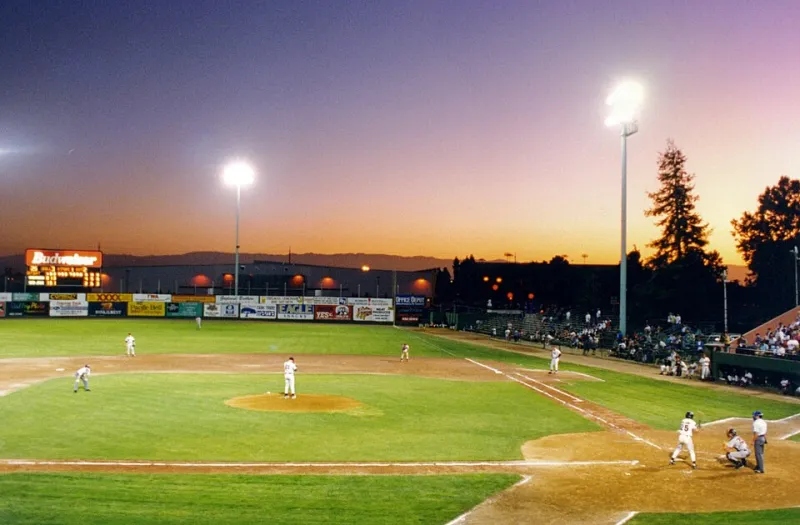
Photo: Rdikeman at English Wikipedia, CC BY-SA 3.0, via Wikimedia Commons
Every brand manager knows the feeling. You've got a campaign concept that tested well in the conference room, but the national rollout carries a seven-figure price tag and zero guarantee. One bad activation at the big league level and you're explaining the spend to the CMO by August.
Here's the play nobody talks about in the boardroom: run it in the minors first.
Why the Minors Are the Perfect Lab
Minor league baseball, hockey, and soccer operate in a sweet spot. The venues are small enough that a single activation is genuinely visible — you can watch fans interact with your concept in real time. The media costs are a fraction of major league rates. And the front offices? They're hungry, flexible, and willing to co-build ideas in ways a big league sponsorship department simply can't afford to.
The audiences aren't throwaway, either. Triple-A markets like Durham, Columbus, and Reno are real mid-sized American cities with real purchasing power. If your concept lands in Durham, there's a decent argument it lands in Tulsa and Toledo too.
What Brands Are Actually Testing
The most common use case is the mascot and character test. A national QSR chain can workshop a secondary mascot or brand character at a Double-A park for a season, watch how kids and parents respond, and kill it quietly if it bombs. Try running that experiment at an MLB stadium with national media watching.
Jersey sponsorship is the other big one. With minor league jersey patch deals often running five figures instead of the millions required at the top level, brands have used affiliates to test whether a logo placement reads on camera, how fans react to it socially, and whether it drives any measurable lift before pitching a major league patch deal internally.
In-game activations get the same treatment. That kiss-cam alternative, that between-innings contest, that branded giveaway — a minor league season gives you 60-plus home games of live A/B testing. Run the concept on Tuesday nights, run a control on Saturdays, and compare. No focus group on earth gives you that data.
The Sub-$50K Test Market Playbook
You don't need a fortune to structure this properly. Here's how we'd build it:
1. Pick two markets, not one. A single affiliate doesn't give you a comparison. Two similar Triple-A or Double-A markets — think Wichita and Tulsa, or Somerset and Hartford — let you run a genuine A/B structure. Budget roughly $15K–$25K per team.
2. Buy a bundled test, not a logo. Negotiate a package that includes a rotating activation slot, a social content series, and one themed night. The point is testing the concept, not renting signage.
3. Demand data in the contract. Attendance lift on activation nights, social engagement rates, email captures, promo code redemptions. Minor league front offices track all of it — make sharing it a deliverable.
4. Set a kill date. Give the test 30 home games. If the metrics don't move, you've spent less than a single major league hospitality suite for the season, and you learned something.
5. Write the scale memo. The real deliverable isn't the minor league campaign — it's the deck you take to the major league negotiation. 'Here's proof this activation moves the needle' is worth far more than the test itself cost.
The Underdog Advantage
There's a bonus layer here: minor league fans tend to be friendlier to sponsors. These teams market affordability and family fun, and fans show up expecting — even enjoying — the between-inning chaos. Your activation isn't interrupting the game; it's part of the show.
That goodwill is nearly impossible to buy at the major league level, where every inch of the stadium is already spoken for and fans are more ad-savvy than ever.
Bottom Line
The majors will always be the prize. But smart brands have figured out that the path to a confident seven-figure commitment runs through a $50K experiment in a ballpark where the hot dog costs four bucks and every seat has a story. Test small. Learn fast. Then go win the big leagues.