Feed the Roster, Win the Room: Inside the Sponsorship Play That Starts at the Training Table
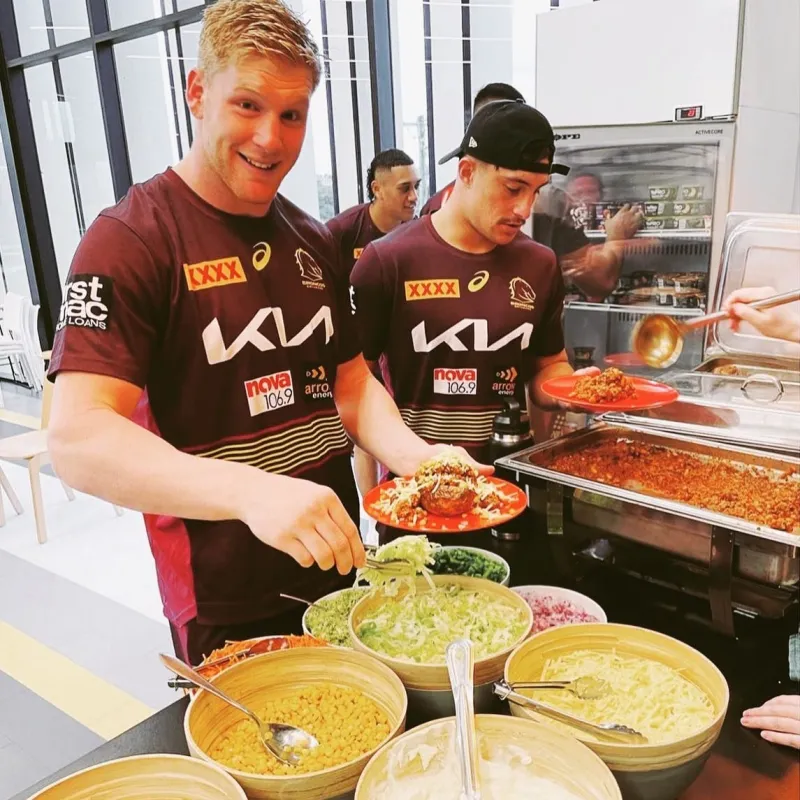
Photo: athletes team meal catering spread locker room sports nutrition, via images.squarespace-cdn.com
There's a moment every sports marketer should witness: a college football team rolling into the fueling station after practice, grabbing a branded protein box, and — this is the important part — actually being glad the sponsor exists.
Try getting that reaction from a right-field billboard.
Team meal and nutrition sponsorships have quietly become one of the fastest-growing categories in sports partnerships. From Texas high school booster programs to NBA training facilities, brands are discovering that feeding athletes builds something no LED ribbon board can buy: daily, genuine affinity from the people fans actually watch.
Why the Training Table Beats the Jumbotron
Think about how sponsorship exposure usually works. A fan sees your logo for a fraction of a second while their attention is split between the game, their phone, and the nachos. It's impression math, and the impressions are thin.
Now compare that to a meal program. Players interact with your brand every day — sometimes twice a day — during the most vulnerable, routine moments of their lives. The recovery smoothie after a brutal conditioning session. The spread after a doubleheader. When a player later tells a reporter they "can't live without" a certain product, that's not a scripted read. That's muscle memory.
And here's the kicker: athletes are influencers now. A Division I linebacker with 40,000 followers posting your product in the locker room is worth more than a season of static signage. NIL has turned every fed athlete into a potential micro-ambassador.
What It Actually Costs
Let's talk numbers, because this is where the opportunity gets interesting.
- High school programs: Local restaurants and regional grocers are catering team meals for $500–$2,000 per week in exchange for verbal shout-outs, social tags, and banner placement. Many do it largely for community goodwill — meaning a real marketing budget can dominate the space fast.
- Club and travel teams: Nutrition partnerships at the club level often run $5,000–$25,000 annually, and these are exactly the athletes who go on to college rosters.
- College programs: Official fueling station partnerships typically start in the low six figures, with Power Conference deals climbing well past that. Still a rounding error compared to seven-figure stadium naming rights.
- Pro teams: Training table and catering sponsorships generally land between $100,000 and $500,000 — a fraction of a jersey patch, with far more daily touchpoints per player.
Per-impression, per-athlete, per-authentic-mention, catering deals are arguably the best value in the entire sponsorship stack.
The Trust Multiplier
Here's the part most brands miss: feeding a team doesn't just reach the players. It reaches the ecosystem.
Coaches eat too. Strength staffs, athletic trainers, equipment managers — all of them move through the fueling station. Team parents see the sponsor's name on the spread at every home game. Local media covering the program inevitably mentions "the meal provided by..."
And when the brand is a food or beverage company, the alignment is self-evident. But the space isn't limited to grocery stores and protein shakes. Sleep brands, recovery tech, insurance companies, and even financial services firms have started catering deals because the message isn't "eat this" — it's "we take care of this team, and so should you."
A How-To for Brands Without a Seven-Figure Budget
You don't need to outbid a national chain to get in the game. Here's the lean playbook:
1. Start where relationships already exist. Does your company cater events? Does an employee coach youth ball? One warm introduction to an athletic director beats a hundred cold emails.
2. Pick one team and over-deliver. A single consistent weekly meal for one program beats a one-off check to a league. Consistency is what turns a caterer into "our sponsor."
3. Make the players the media. Structure the deal so athletes have permission (and incentive) to tag your brand. With high schoolers, route this through the booster club. With college athletes, build in modest NIL compensation — even $50 per post moves the needle.
4. Capture the content. The post-practice spread, the team huddle over the boxes, the coach's thank-you — this is authentic UGC gold that would cost a fortune to stage.
5. Expand outward, not upward. Once one program vouches for you, the neighboring athletic director takes your call. Sponsorship in this space spreads through trust, not RFPs.
The Bottom Line
Sports marketing has always chased attention. Catering partnerships chase something rarer: gratitude. A fan forgets a banner. An athlete never forgets who fed them through two-a-days.
For brands priced out of naming rights and tired of competing for eyeballs, the smartest placement in sports might just smell like garlic bread and sound like a locker room after a win.
Get to the table before someone else does.