Five Hundred Bucks, One Jersey, Zero Waste: How the Rec League Became Main Street's Best Ad Buy
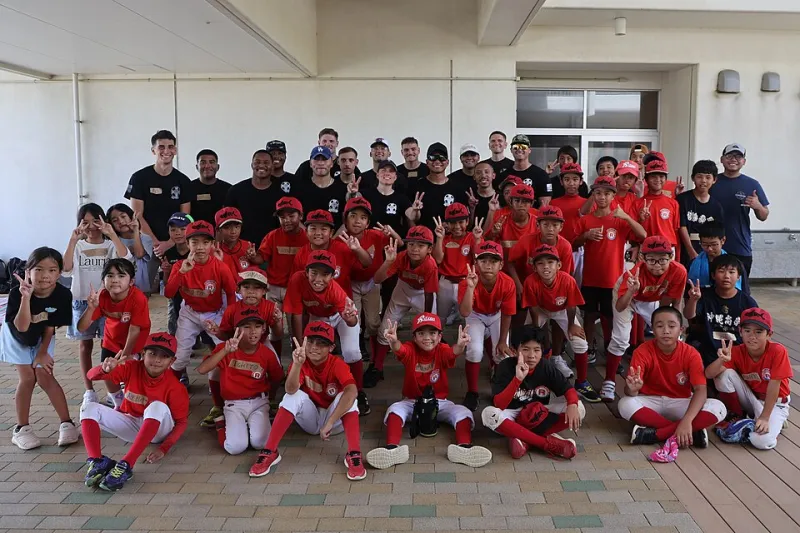
Photo: U.S. Marines 1MAW by Lance Cpl. Thalia Rivera, Public domain, via Wikimedia Commons
Every Saturday morning across America, thousands of youth soccer, baseball, and basketball games kick off in front of the most valuable audience in advertising: parents who live within three miles of your business and have nothing better to do than read the back of a jersey.
And lately, those jerseys have gotten expensive.
Ask any rec league board member in a growing suburb — say, Frisco, Texas, or the strip of fast-developing townships outside Columbus — and they'll tell you the same thing. Sponsorship slots that used to go to whoever signed the form first are now being bid up. Two competing pizza places. A dental group and an urgent care clinic. Sometimes a regional credit union squaring off against a national insurance franchise for the same 10-and-under travel team.
The rec league jersey patch has quietly become one of the most contested pieces of ad inventory in the country. Most brands still haven't noticed. The ones that have are winning their markets.
Why the Patch Beats the Billboard
The math is almost embarrassing for traditional local media.
A billboard on a well-traveled commuter road might run $1,500 to $3,000 a month, hitting tens of thousands of drivers who forget it the second they pass it. A youth league jersey sponsorship typically costs $250 to $750 for an entire season — sometimes up to $2,000 for a marquee travel team slot — and puts your name on the chest of a kid whose entire extended family sees it at every game, every practice, every team photo that ends up framed on a grandparents' wall.
More importantly, it buys something a billboard never can: goodwill. When the local hardware store sponsors the 9U softball team, that's not advertising. That's community membership. And community membership converts.
The audience profile is unbeatable, too. Youth league parents skew toward homeowners with kids, dual incomes, and a constant need for exactly what local service businesses sell — dentistry, HVAC, orthodontics, landscaping, insurance. You're not buying reach. You're buying the exact customer, at the exact moment they're standing around for an hour with nothing to look at.
The Bidding War Nobody Expected
So how did this become competitive?
Three forces collided. First, the collapse of local print advertising left small businesses hunting for replacements, and rec leagues were sitting right there with clean inventory. Second, youth sports spending exploded — families now routinely drop thousands per kid per year, and leagues professionalized their sponsorship packets accordingly. Third, regional brands figured out that hyperlocal beats national for their business model. A chain of orthodontic offices with eight locations doesn't need a Super Bowl spot. It needs every family in a ten-mile radius to know its name.
The result: league boards now field multiple offers for the same team. Travel programs — the select teams that travel to weekend tournaments — command the highest prices, often $1,000 to $5,000 a season from businesses that understand these families drive 90 minutes each way and spend heavily on the way.
Some leagues have gotten sophisticated. Multi-year deals. Category exclusivity, so the competing pizza place can't sponsor the rival team. Field signage bundled with jersey patches. One travel baseball program outside Phoenix reportedly sold its entire season sponsorship slate — jerseys, banners, tournament program ads — for north of $30,000.
When $500 Beats $50,000
Here's the part that should make every brand manager squint at their media plan.
A $50,000 stadium banner at the local high school — and yes, those deals exist, and yes, they're real money — buys prestige and volume. Every Friday night crowd sees it. But a banner is passive. A jersey patch is relational. The banner says "we advertise here." The patch says "we're part of this town."
For a regional service business, the $500 patch will almost always outperform. The return isn't measured in impressions; it's measured in the front desk hearing "I saw you sponsor my daughter's team" three times a week. That's a customer acquisition cost no digital channel can touch.
The stadium banner makes sense when you're a brand playing a longer game — a bank branch, a hospital system, a car dealership building top-of-mind awareness across a whole community. Volume matters there. But if your business lives and dies on a five-mile radius, spread $5,000 across ten jersey sponsorships instead of one banner. Ten teams means ten networks of parents, ten team-group chats where your name appears, ten photo days.
How to Win the Bid (Without Overpaying)
If you're a brand eyeing this space, a few ground rules from the deals we've watched close:
Move early. Sponsorship packets go out in July and August for fall sports, January for spring. The good teams — the ones with committed families and long seasons — get claimed fast.
Buy the team, not the league. League-wide deals look efficient but dilute you across dozens of rosters. Sponsoring one competitive travel team concentrates your visibility on the most engaged families.
Ask for the roster of sponsors. If a national brand already owns your category league-wide, negotiate exclusivity at the team level or walk. Half the value of a patch is being the only one.
Show up. Sponsor the end-of-season pizza party. Put a cooler on the bench. The businesses that win long-term in youth sports aren't the ones that write the biggest check — they're the ones the league board members see at every game.
The banner business had its century. The jersey patch is having its moment right now, in towns where a $500 handshake deal still means something. Brands that figure that out before their competitor does will own the most valuable three inches of fabric in their market.
And unlike that billboard on Route 9, nobody's driving past it.